Mini Bernedoodle Generations Explained: F1, F1b, F2, Multigen, and Ultra
If you’ve been browsing Mini Bernedoodle litters, you’ve probably run into a wall of letters and numbers — F1, F1b, F2, F3, Multigen, Ultra — and wondered what any of it actually means for the puppy you bring home.
The short version: these labels describe how much Poodle vs. how much Bernese Mountain Dog is in a puppy’s genetic makeup, which directly affects coat type, shedding, and how predictable those traits are. Here’s exactly what each generation means, and which one might be the best fit for your family.
We currently offer five Mini Bernedoodle generations: Mini F1, Mini F1b, Mini F2, Mini F3 (Multigen), and Reverse Mini F1b (also called Ultra).
Mini F1 Bernedoodle
Genetic makeup: 50% Bernese Mountain Dog, 50% Miniature/Toy Poodle (first-generation cross)
A Mini F1 is the original cross — a purebred Bernese Mountain Dog bred directly to a Miniature or Toy Poodle. This generation gives you the strongest “hybrid vigor” and tends to produce sturdy, healthy puppies with a nice blend of both parent breeds.
Coat: Can range from wavy to curly, and shedding varies puppy to puppy — some F1s shed lightly, some shed close to not at all. Coat outcome is the least predictable of any generation.
Best for: Families who love genetic diversity and aren’t as concerned about a guaranteed low-shed coat.
Mini F1b Bernedoodle
Genetic makeup: 25% Bernese Mountain Dog, 75% Poodle (an F1 bred back to a Poodle)
An F1b is created by breeding an F1 Bernedoodle back to a Miniature or Toy Poodle. The “b” stands for backcross. Because the Poodle influence is stronger, F1b puppies are much more likely to have a low-to-non-shedding, curlier coat — making this our most popular generation for families with allergies or shedding concerns.
Coat: Wavy to curly, low-to-non-shedding, more predictable and more Poodle-like than an F1.
Best for: Families prioritizing a consistent, non-shedding coat.
Mini F2 Bernedoodle
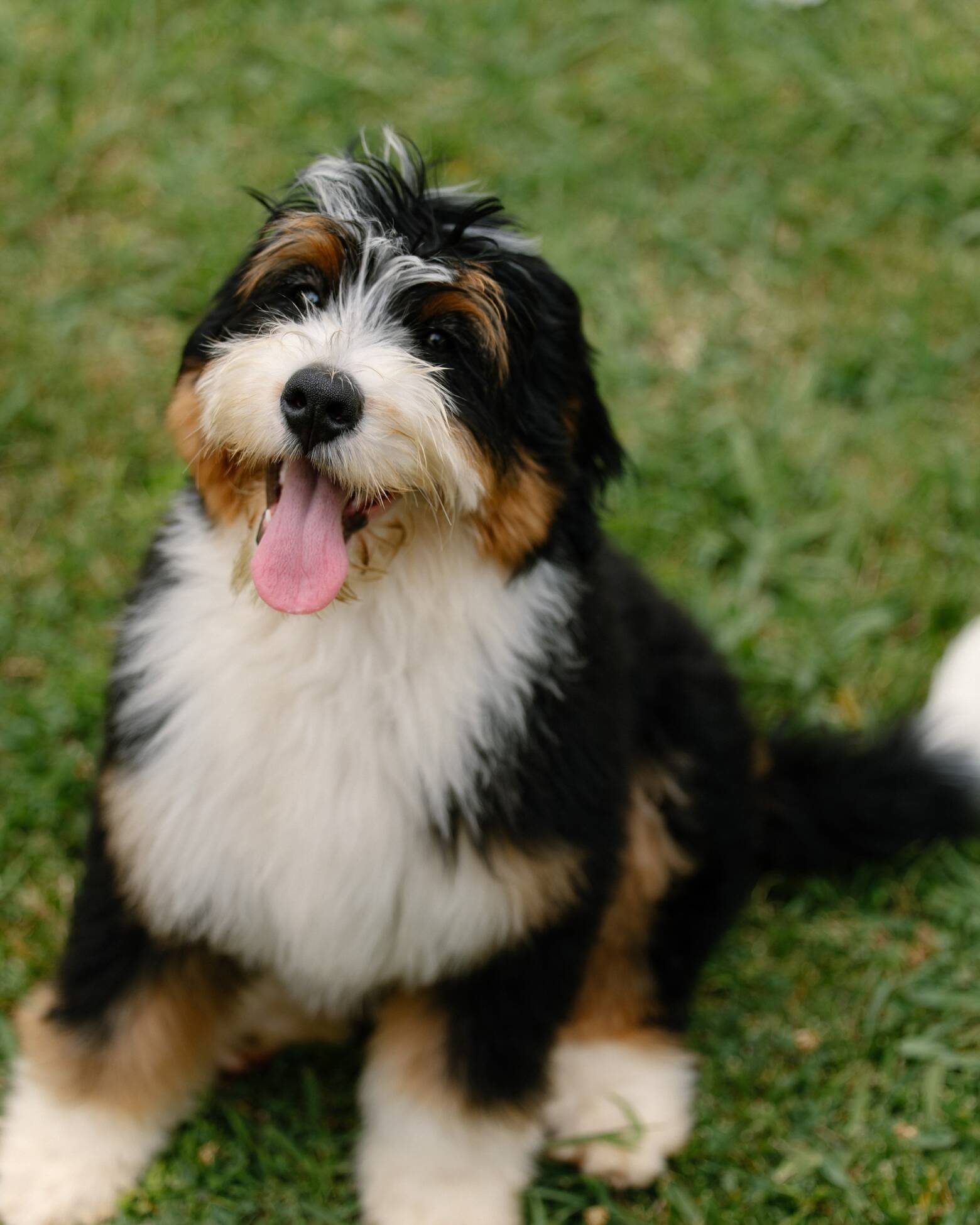
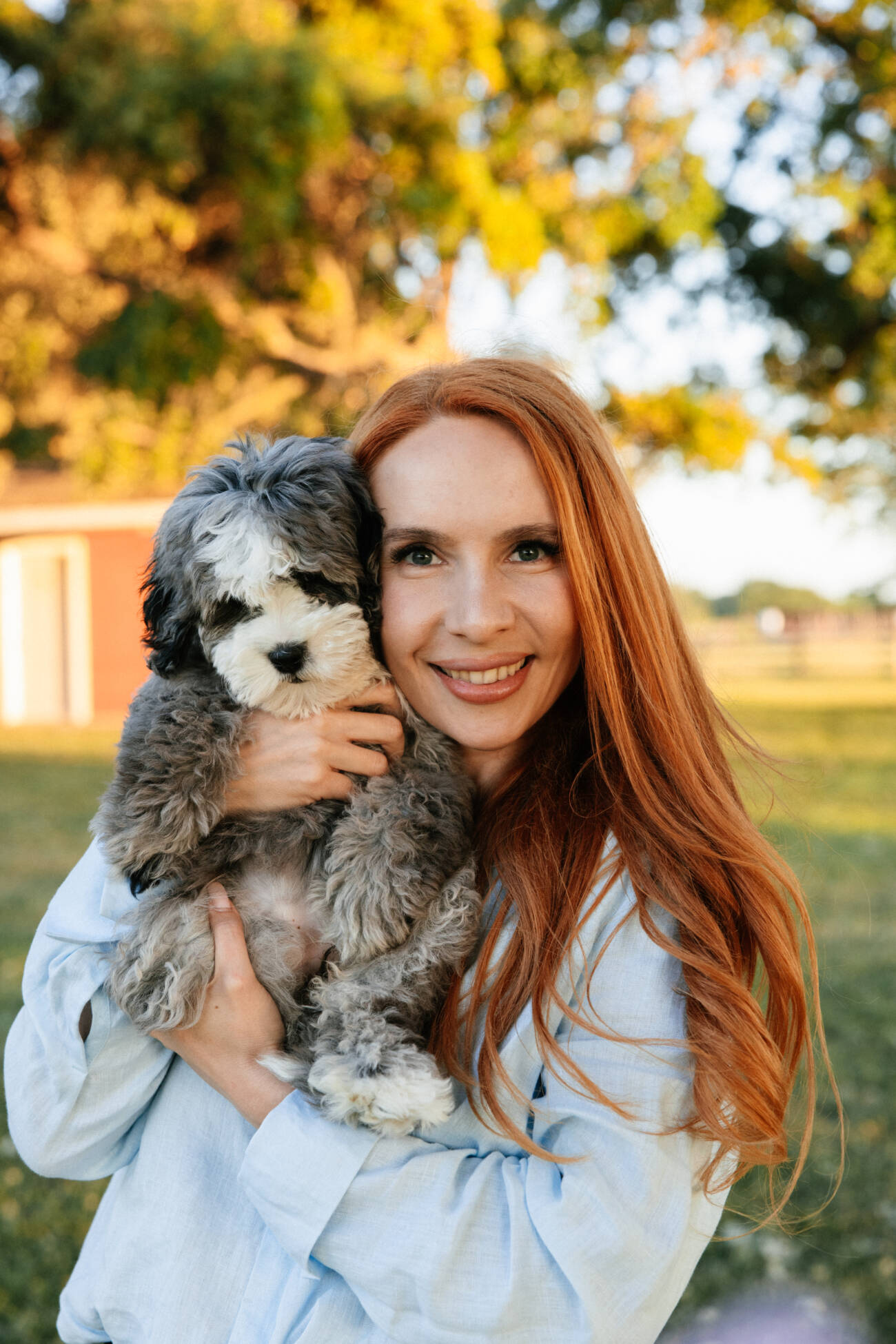
Genetic makeup: Roughly 50% Bernese Mountain Dog, 50% Poodle (two F1 Bernedoodles bred together)
An F2 comes from breeding two F1 Bernedoodles to each other. The overall genetic ratio stays close to 50/50, but combining two hybrid parents creates the widest range of variation of any generation — coat, size, and color can differ noticeably between puppies in the same litter.
Coat: Highly variable, from straight to wavy , even within the same litter. Mostly low-to-non-shedding.
Sometimes we have unfurnished bernedoodles in these litter aka Mini Bernese (link to this page)
Best for: Families who are flexible on exact coat outcome and enjoy the surprise factor of a litter with more variation.
Mini F3 Bernedoodle (Multigen)
enetic makeup: Varies — the result of breeding Bernedoodles to Bernedoodles across three or more generations
F3, also called Multigen, refers to any generation beyond F2. These litters come from selectively pairing Bernedoodles (rather than crossing back to a purebred Poodle or Bernese), with each generation bred to reinforce consistent coat type, size, temperament, and health outcomes.
Because multigen breeding builds on generations of established traits, outcomes become far more predictable than earlier generations — you’re seeing the result of careful, cumulative selection rather than a first or second-generation cross.
Coat: Low-to-non-shedding and consistent, assuming the breeding program has selected for it across generations.
Best for: Families who want the most predictable outcome in coat, size, and temperament.
Reverse Mini F1b Bernedoodle (Ultra)
Genetic makeup: 75% Bernese Mountain Dog, 25% Poodle (an F1 bred back to a Bernese Mountain Dog instead of a Poodle)
We call this generation “Ultra.” A reverse F1b flips the usual F1b formula — instead of breeding an F1 back to a Poodle, we breed it back to a purebred Bernese Mountain Dog. The result carries much more Bernese influence than a standard F1b.
Sometimes we have unfurnished bernedoodles in these litter aka Mini Bernese (link to this page)
Coat: Tri-colored teddy-bear look, slightly bigger in size 40-50 lbs, low/moderate-shedding.
Look and feel: Ultra Bernedoodles tend to look and feel closer to a Bernese Mountain Dog, with the classic tri-color Bernese markings especially strong in this generation.
Best for: Families who love the Bernedoodle temperament but want a dog that looks and feels closer to a purebred Bernese, and who don’t need a non-shedding coat.
Which Mini Bernedoodle Generation Is Right for You?
Prioritizing low-shedding and predictability: Mini F1b or Mini F3 (Multigen)
Prioritizing genetic diversity, less concerned about shedding: Mini F1
Want variety, smaller size and unique coat patterns: Mini F2
Want that classic Bernese look and don’t mind more shedding: Reverse Mini F1b (Ultra)
Still not sure? Reach out to Anna — we’re happy to walk you through the coat, temperament, and health profile of each generation and help you find the right match for your family and lifestyle.
Frequently Asked Questions About Mini Bernedoodle Generations
What does F1, F1b, F2, and F3 mean in Bernedoodles?
These labels describe the generation of the cross. F1 is a first-generation Bernese x Poodle cross. F1b is an F1 bred back to a Poodle (more Poodle influence). F2 is two F1s bred together. F3/Multigen refers to generations beyond F2, bred through selective Bernedoodle-to-Bernedoodle pairings.
What generation sheds the least?
Mini F1b, F2 and Mini F3 (Multigen) generations are typically the lowest-shedding, since they carry the highest proportion of Poodle genetics or have been selectively bred for a low-shed coat across multiple generations.
What is a Reverse F1b Bernedoodle?
A Reverse F1b (which we call “Ultra”) is an F1 Bernedoodle bred back to a purebred Bernese Mountain Dog instead of a Poodle. This results in about 75% Bernese and 25% Poodle genetics, giving the dog a straighter, shedding coat and a look closer to a purebred Bernese.
Which generation is best for allergies?
Mini F1b, F2 and Mini F3 (Multigen) Bernedoodles are generally the best choices for allergy-sensitive families, since they carry the strongest and most consistent Poodle coat influence.
Is a Multigen Bernedoodle the same as an F3?
Yes — in our litters, F3 and Multigen refer to the same thing: any generation beyond F2, bred through multiple generations of Bernedoodle-to-Bernedoodle pairings.
Do all Mini Bernedoodle generations come in the same size?
Generation (F1, F1b, F2, etc.) refers to genetic makeup, not size. Size is determined separately by the specific Poodle line used (Miniature or Toy). Ask Anna about the parent dogs’ sizes for the most accurate expectations for a specific litter.
Which generations do you currently offer?
We currently offer Mini F1, Mini F1b, Mini F2, Mini F3 (Multigen), and Reverse Mini F1b (Ultra). Availability varies by litter — check our available puppies page or contact Anna for current options.
Ready to Find Your Mini Bernedoodle?
Whether you want the lowest-shedding coat possible or love the classic Bernese look, we’ll help you find the generation that fits your family best.