
F2 and Ultra Standard Bernedoodles: Why These Generations Are the Best Choice
If you want a Standard Bernedoodle that looks and feels like the real thing — sturdy, classic, unmistakably part Bernese Mountain Dog — the generation matters as much as the breed. At Bernedoodles & Co, we breed exclusively **F2** and **Ultra (reverse F1B)** Standard Bernedoodles, two generations that prioritize genetic health, structural soundness, and true-to-type temperament over a manufactured “hypoallergenic” coat. Here’s why we chose these generations, and why they may be the better fit for your family than a more common F1B or multigen doodle.
What Is a Standard Bernedoodle?
A Standard Bernedoodle is the largest size category of the Bernese Mountain Dog x Poodle cross, typically standing 23–29 inches at the shoulder and weighing 70–90 pounds at maturity, with some lines ranging from 55 to over 100 pounds depending on the parent dogs. Standards mature more slowly than smaller Bernedoodles, usually reaching full size between 18 and 24 months, and typically live 12–15 years — noticeably longer than most purebred Bernese Mountain Dogs.
Understanding F2 and Ultra (Reverse F1B) Generations
Bernedoodle generations are labeled with an “F” (filial) number showing how many generations removed a puppy is from the original Bernese-Poodle cross, plus a “B” when a litter is backcrossed to one parent breed.
F2: The Second-Generation Cross
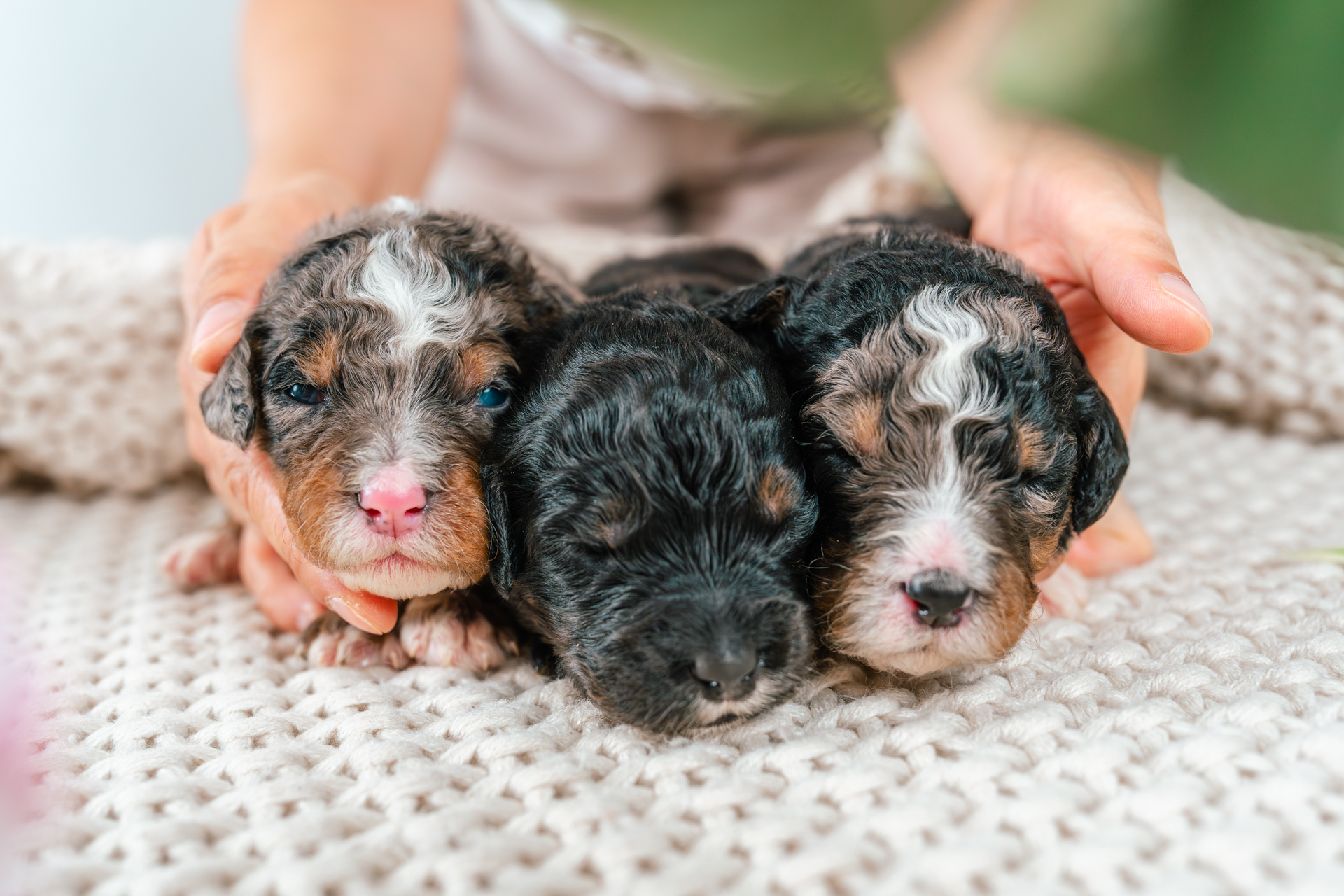
An F2 Bernedoodle is produced by breeding an F1 Bernedoodle to another F1 Bernedoodle, resulting in a puppy that is genetically close to 50% Bernese and 50% Poodle — the same balanced ratio as the original F1 cross, but with two generations of proven, health-tested Bernedoodle parents behind it instead of two different purebred breeds meeting for the first time. This generation is intentionally harder to produce well: it takes two compatible, well-matched F1 lines to breed a consistent F2 litter, which is exactly why fewer breeders offer it.
Ultra (Reverse F1B): The Bernese-Forward Generation
An Ultra Bernedoodle — also called a reverse F1B — comes from breeding an F1 or F1B Bernedoodle back to a purebred Bernese Mountain Dog rather than a Poodle, producing a puppy that is roughly 75% Bernese and 25% Poodle. The result is a larger-framed dog with a more traditional Bernese Mountain Dog look and structure, while still carrying enough Poodle influence to benefit from hybrid vigor. Producing a sound Ultra litter takes years of documented lineage and consistent health testing on both sides of the pedigree, which is why this generation is one of the rarest offered by any breeding program.
Why We Breed Only F2 and Ultra Standard Bernedoodles
Most breeders default to F1B or multigen litters because they’re the easiest to market as “low-shed” and “hypoallergenic.” We breed F2 and Ultra because we believe they produce a better dog for most families who want a true Standard-sized companion — not a smaller, curlier version of one. Here’s what sets these two generations apart.
1. Genetic Diversity and Hybrid Vigor
F2 and Ultra litters draw on a broader genetic base than repeated backcrosses to the same breed. Continually breeding back to Poodle (as in F1B and multigen lines) narrows the gene pool with each generation. F2 and Ultra litters instead balance genetics from two distinct, health-tested lineages, which supports the hybrid vigor that makes crossbred dogs generally healthier and longer-lived than purebreds of either parent breed.
2. A True-to-Type Standard Look and Structure
Families who choose a Standard Bernedoodle usually want the classic Bernese Mountain Dog presence — a big, sturdy, tri-colored companion. Because F2 and Ultra generations carry a higher or balanced percentage of Bernese genetics compared to heavily backcrossed lines, they’re more likely to produce that traditional look, bone structure, and coat pattern that many Standard Bernedoodle buyers are actually picturing.
3. Steadier, More Predictable Temperament at Full Size
The Bernese Mountain Dog temperament — patient, loyal, gentle with children — comes through more strongly in F2 and Ultra generations. Combined with the Poodle’s intelligence and trainability, these dogs tend to mature into calm, confident, people-focused companions that are easier to predict at full adult size than a puppy from a heavily mixed multigen pedigree.
4. Rarity and Specialized Breeding Expertise
Because F2 and Ultra litters are harder to produce consistently — they require carefully matched parent dogs, deep pedigree knowledge, and rigorous generational health testing — far fewer breeders offer them. Choosing a breeder who specializes in these generations means working with someone who has invested in the harder path rather than the easiest one to market.
5. Honest Expectations About Coat and Shedding
F2 and Ultra Bernedoodles shed more than F1B or multigen lines — this is a genuine tradeoff, not a flaw to hide. For families without significant allergies who want a lower-maintenance coat, easier brushing routine, and the classic Bernedoodle look over a curly, low-shed Poodle-like coat, that tradeoff is a feature, not a drawback.
Size, Growth, and Structure
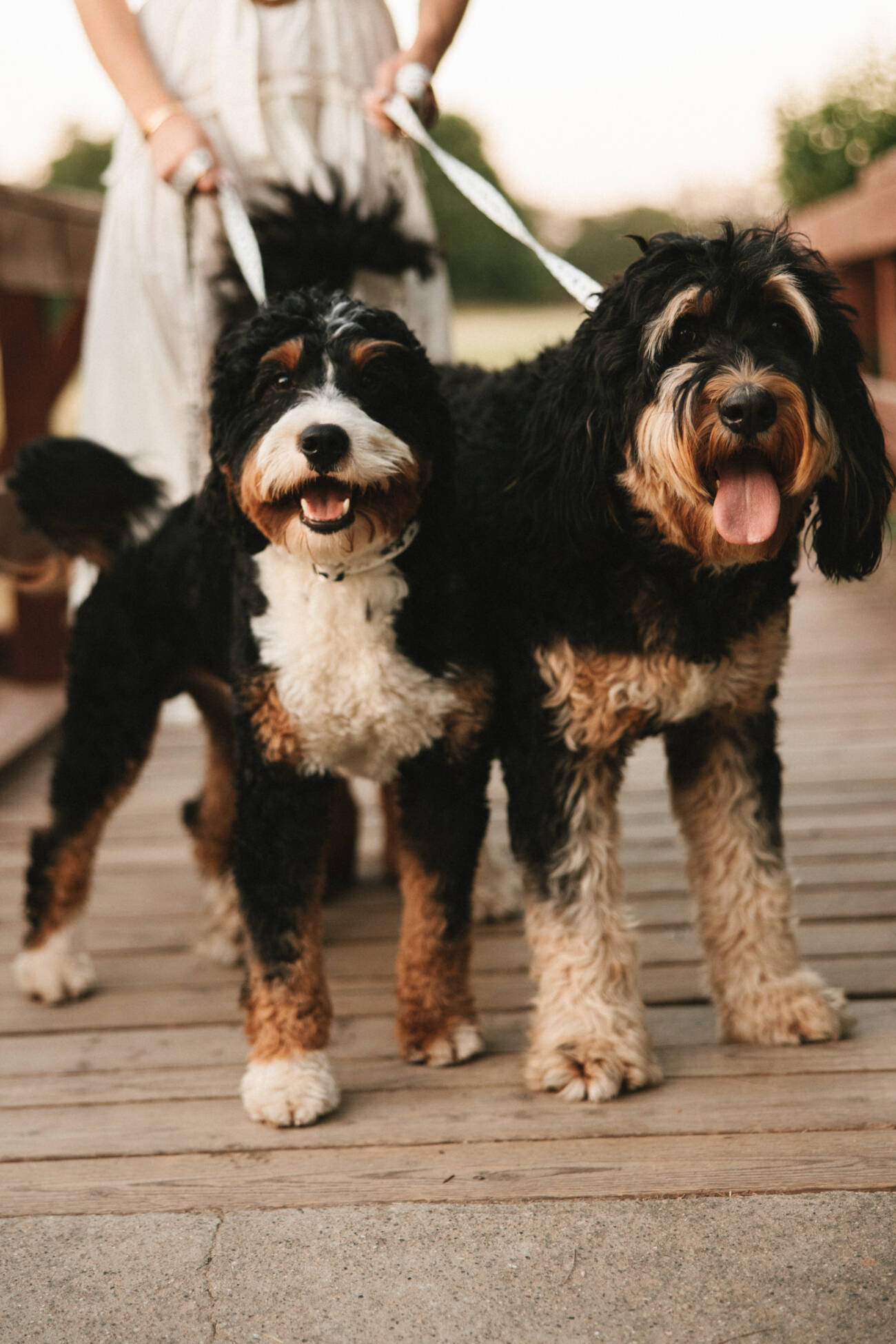
Standard F2 and Ultra Bernedoodles both mature into large dogs, generally in the 70–90 lb range, with Ultra litters trending toward the higher end of that range or beyond due to their heavier Bernese influence. Like other Standard Bernedoodles, expect a longer growth timeline — 18 to 24 months to reach full adult size and structure.
Temperament and Trainability
Both generations combine the best-known traits of their parent breeds:
– Gentle, patient, and exceptionally good with children and other pets
– Loyal and people-oriented, often described as devoted family dogs
– Intelligent and responsive to positive-reinforcement training, though Ultra puppies may show a bit more Bernese independence than a Poodle-forward line
– Confident and steady temperaments that suit active families, therapy work, or simply a calm household companion
Coat and Grooming
F2 litters can range from wavy to flat coats depending on the individual puppy, while Ultra litters more consistently favor a flatter, denser coat closer to a purebred Bernese. Both generations require regular brushing, and shedding will be more noticeable than in F1B or multigen doodles. Routine brushing two to three times a week and periodic professional grooming keep the coat healthy and manageable.
Health and Longevity
Purebred Bernese Mountain Dogs face well-documented health challenges, including a higher-than-average cancer rate and a median lifespan often cited around 7–10 years. Crossing in Poodle genetics — even at the Ultra generation’s 75% Bernese ratio — introduces hybrid vigor that has been associated with improved longevity and reduced incidence of some inherited conditions. F2 and Ultra Standard Bernedoodles from health-tested parents typically live 12–15 years, a meaningful improvement over the purebred Bernese Mountain Dog’s typical lifespan.
Who Should Choose an F2 or Ultra Standard Bernedoodle
F2 and Ultra generations are an excellent fit for families who:
– Want the classic Bernese Mountain Dog look and size in a healthier, longer-lived companion
– Don’t have significant pet allergies and are comfortable with moderate shedding
– Prioritize temperament, structure, and genetic diversity over a curly, low-shed coat
– Want to work with a breeder who specializes in a less common, more carefully managed generation
Frequently Asked Questions
What is the difference between an F2 and an Ultra Bernedoodle?
An F2 Bernedoodle comes from breeding two F1 Bernedoodles together, resulting in a roughly 50% Bernese, 50% Poodle puppy. An Ultra (reverse F1B) Bernedoodle comes from breeding an F1 or F1B Bernedoodle back to a purebred Bernese Mountain Dog, resulting in a puppy that’s roughly 75% Bernese and 25% Poodle with a more traditional Bernese look and structure.
Do F2 and Ultra Bernedoodles shed?
Yes. Both generations shed more than F1B or multigen Bernedoodles because they carry less Poodle-derived coat genetics. Families prioritizing a low-shed, hypoallergenic-leaning coat should consider an F1B or multigen generation instead; families who want the classic Bernese look and don’t have significant allergies are well suited to F2 or Ultra.
Why would a breeder choose to raise only F2 and Ultra generations?
These generations are harder to produce consistently and require deeper pedigree knowledge and more extensive generational health testing than F1B or multigen litters. Breeders who specialize in F2 and Ultra generations are typically focused on genetic diversity, structural soundness, and preserving the classic Bernese Mountain Dog type rather than optimizing purely for coat.
Are F2 and Ultra Standard Bernedoodles healthier than purebred Bernese Mountain Dogs?
Crossbreeding introduces hybrid vigor, which is generally associated with improved health outcomes and longevity compared to purebred lines. F2 and Ultra Standard Bernedoodles from health-tested parents typically live 12–15 years, compared to a purebred Bernese Mountain Dog’s median lifespan of roughly 7–10 years.
How big does a Standard F2 or Ultra Bernedoodle get?
Most reach 70–90 pounds and 23–29 inches at the shoulder, with Ultra generation dogs sometimes running larger due to their stronger Bernese influence. Full adult size is typically reached between 18 and 24 months.
Is an F2 or Ultra Bernedoodle a good family dog?
Yes. Both generations are known for gentle, loyal, people-oriented temperaments that do well with children and other pets, combined with the trainability and intelligence inherited from the Poodle side.
Why Choose Bernedoodles & Co
At Bernedoodles & Co, we breed exclusively F2 and Ultra Standard Bernedoodles in [your location/state] because we believe these generations offer the best combination of health, structure, and true-to-type temperament for families who want a real Standard-sized companion.